Description
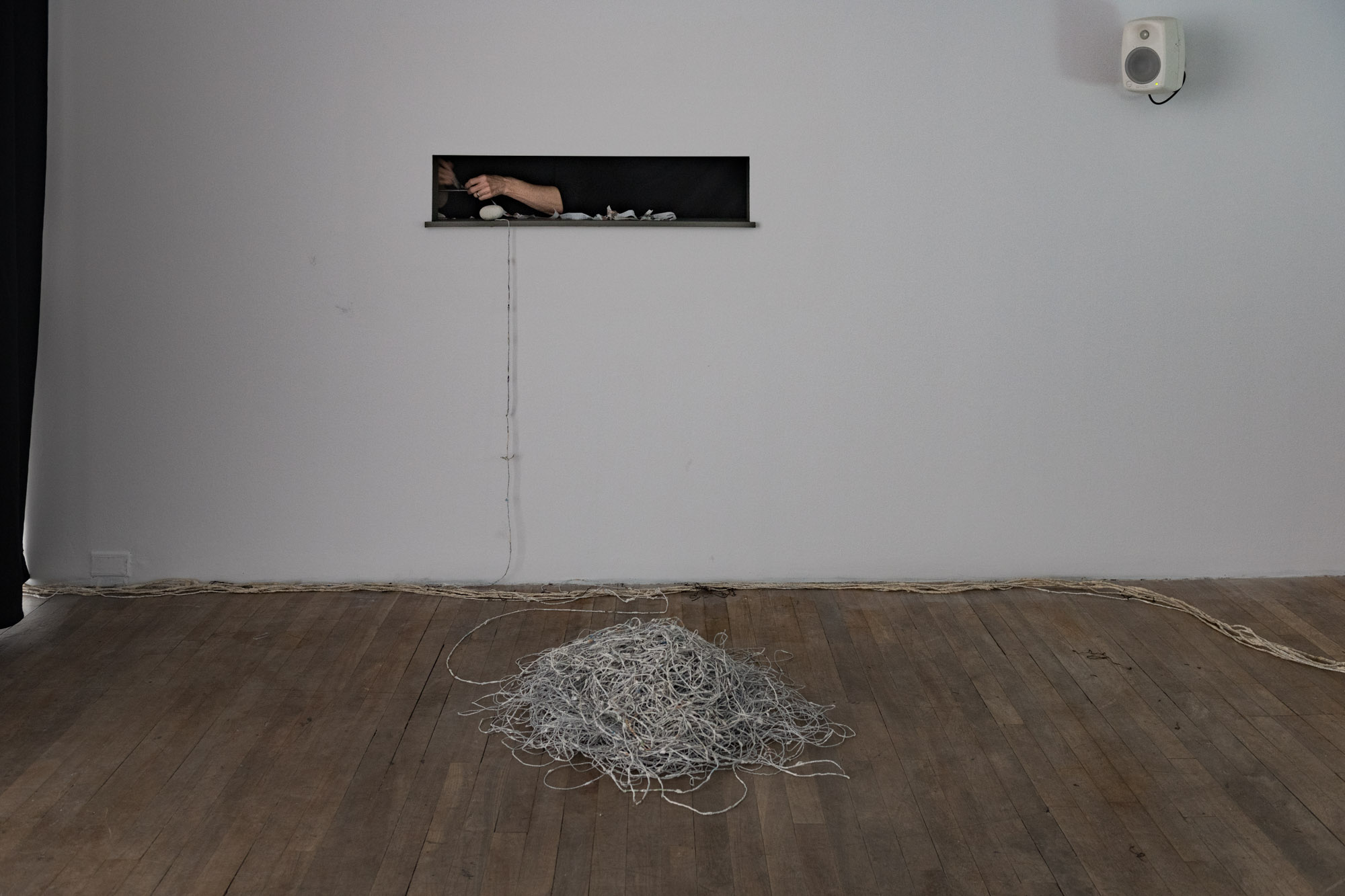
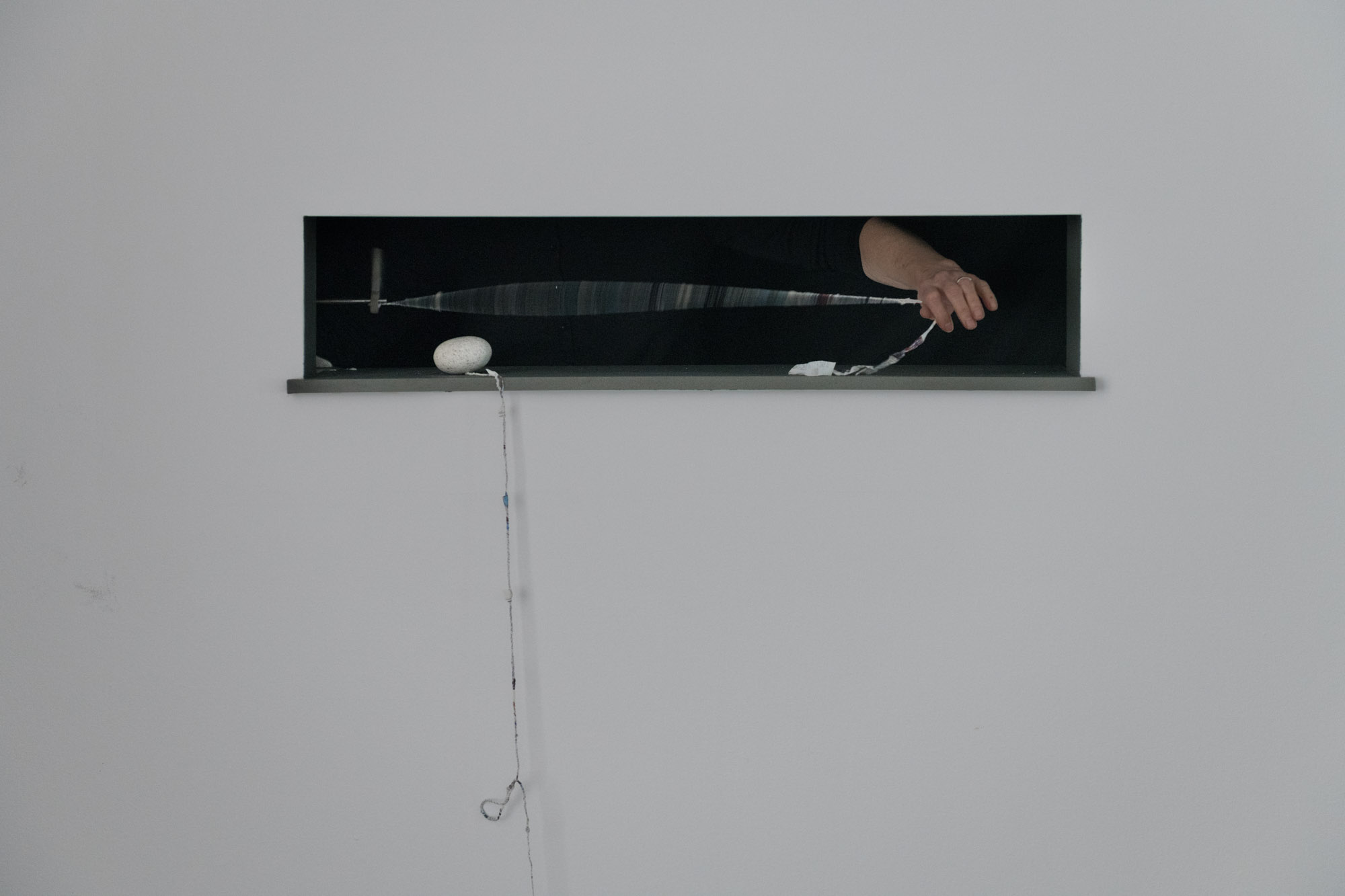
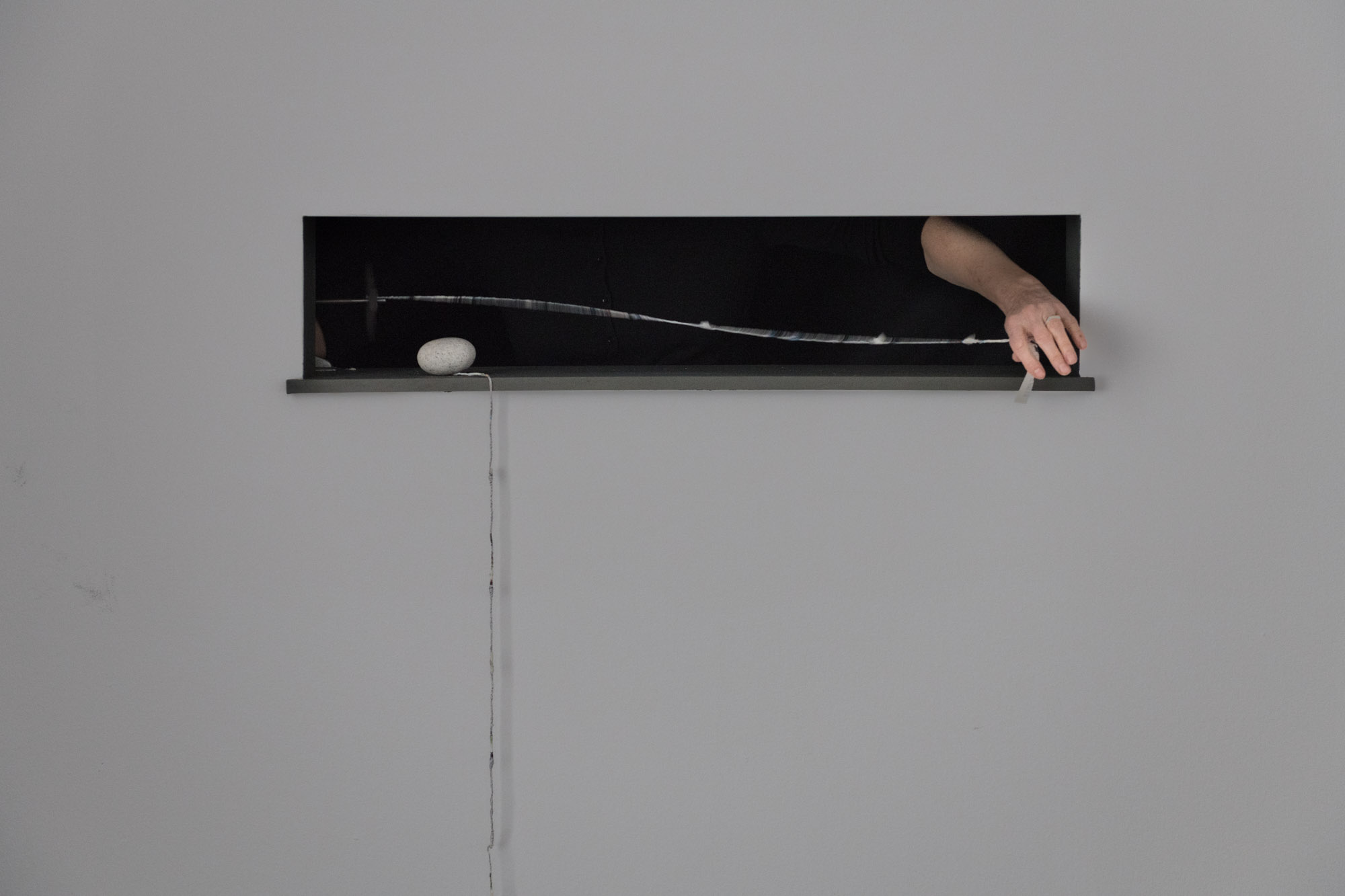
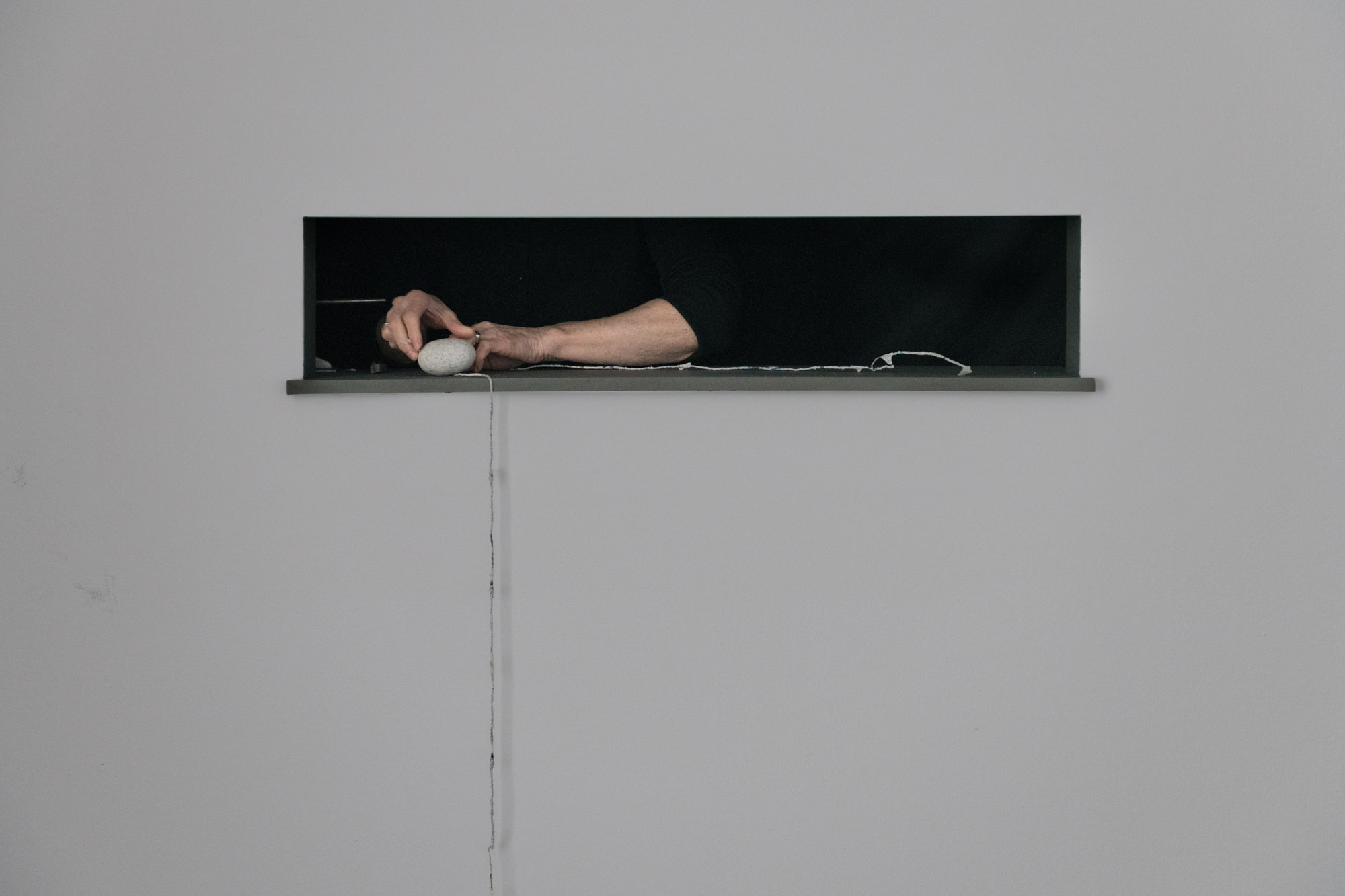
In the Écouter avec les doigts performance. A wide rectangular hole (approx. one meter) was cut in the gyprock wall of the gallery leading to a small closet on the other side. The opening was framed on the inside and a narrow ledge was installed at the bottom. The closet was unlit and remained dark. An antique bobbin winder was installed at one end of the opening exposing only the spindle.
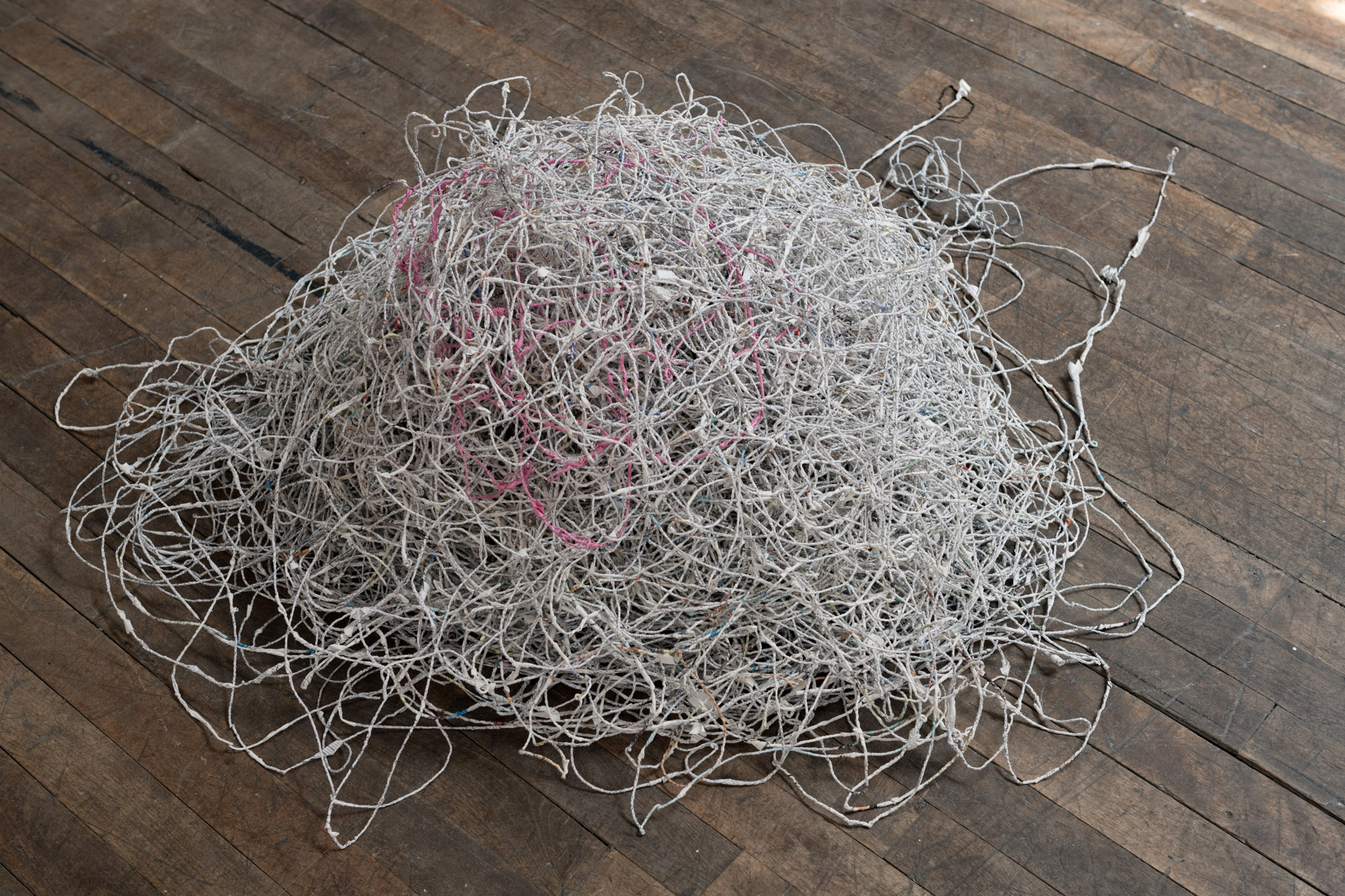
For the performance, the artist had prepared one-centimeter wide strips of cut dictionary pages, each of which were attached to the spindle using a clothes pin. The viewer could see only the artist’s disembodied hands turning the bobbin crank to spin the strips into a thread. When each strip was completely wound, it was removed from the spindle and one of its ends was twisted by hand to the end of the previous thread (held in place by a round stone), connecting them to create a continuous thread. This thread was dropped into a pile on the floor, accumulating over the duration of the exhibition.
——————————————
Dans la performance Écouter avec les doigts, un large trou rectangulaire (environ un mètre) a été coupé dans le mur en gypse de la galerie, menant à un petit placard de l’autre côté. L’ouverture a été encadrée à l’intérieur et un rebord étroit a été installé au fond. Le placard n’était pas éclairé et restait sombre. Un bobineur antique a été installé à l’une des extrémités de l’ouverture, n’exposant que le fuseau.
Pour la performance, l’artiste avait préparé des bandes d’un centimètre de large à partir de pages de dictionnaire découpées, chacune devant être attachée au fuseau à l’aide d’une épingle à linge. Le spectateur ne voyait que les mains désincarnées de l’artiste qui tournaient la manivelle de la bobine pour filer les bandes. Lorsque chaque bande était complètement enroulée, elle était retirée du fuseau et l’une de ses extrémités était torsadée à la main à l’extrémité du fil précédent (maintenue en place par une pierre ronde), les reliant pour créer un fil continu. Ce fil a été déposé en tas sur le sol et s’est accumulé pendant toute la durée de l’exposition.
Statement
A common story describing the origins of the world often includes a spinner/weaver and most often she is a woman. In Greek mythology, the Three Fates – Clotho spins, Lachesis measures and Atropos cuts the thread. The threads of this history are still present in our expressions, woven into the fabric of our society. Let me spin you a tale, and especially, we hang by a thread.
In Écouter avec les doigts / The Fingers Listen I was also thinking of the fairy tales I read as a child about piles of straw being spun magically overnight into gold. I wanted the viewer to see only my hands, as if disembodied, magically spinning paper into thread.
——————————————————
Une histoire commune décrivant les origines du monde inclut souvent un fileur/tisseur et, le plus souvent, il s’agit d’une femme. Dans la mythologie grecque, les trois Moires – Clotho file, Lachesis mesure et Atropos coupe le fil. Les fils de cette histoire sont toujours présents dans nos expressions, tissés dans le tissu de notre société : suivre le fil conducteur, donner du fil à retordre, ne tenir qu’à un fil.
Dans Écouter avec les doigts, je pensais aussi aux contes de fées que je lisais lorsque j’étais enfant et qui racontaient comment des tas de paille se transformaient magiquement en or du jour au lendemain. Je voulais que le spectateur ne voie que mes mains, comme si elles étaient désincarnées et qu’elles transformaient magiquement le papier en fil.
Karen Trask, 2024. Traduction, Mélissa Guay, 2025